
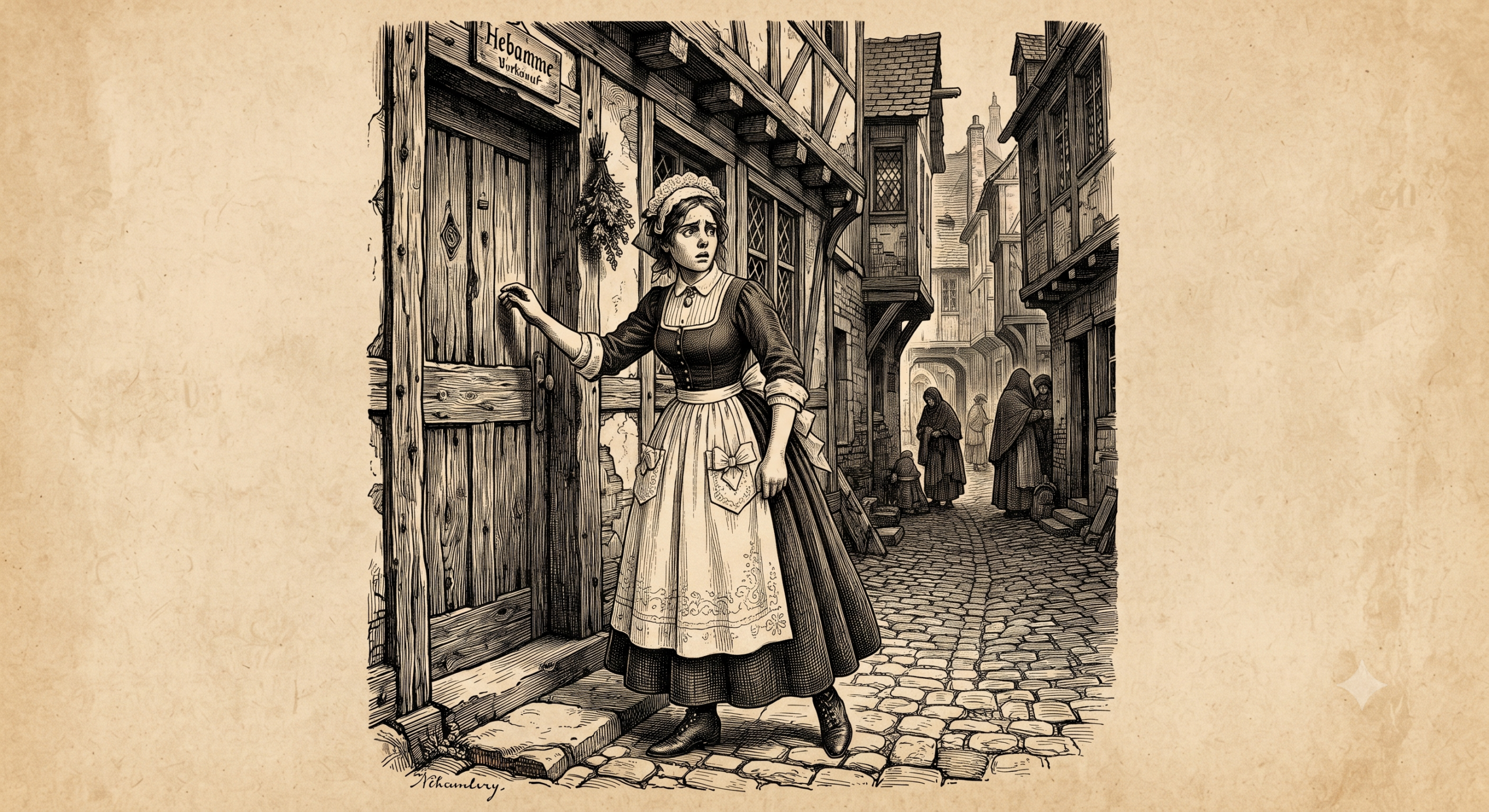
23. Who Were the Angel-Makers?
History is known to be filled with bright moments, but its darkest corners are also hidden by it. Undeniably, one of them is represented by the phenomenon of angel-makers – women by whom a secret trade, consisting of the performance of abortions and the disposal of unwanted children, was operated in the past. Furthermore, this harsh business was not produced by human depravity, but rather it was formed as a reaction to poverty, social pressure, and a non-existent social safety net. In the event of an unwanted pregnancy, the immediate loss of livelihood, rejection by their own family, and public condemnation were faced by single mothers, maids, or poor female workers. Consequently, the decision that the services of an angel-maker would be sought was never considered an easy step for women. In a hopeless situation, their own lives were risked by them in the field conditions of illegal surgeries. The following lines reveal by whom the angel-making trade was operated, how word of mouth was functioned when contacts were being sought, how much money was cost by the procedure, and how strictly this activity was punished over the centuries – from medieval capital courts to modern police investigations.
By whom was angel-making operated? Poor women, widows, or midwives without legal certification were frequently turned into angel-makers. Generally, their operations were conducted in secrecy both in the countryside and in the slums of large cities, such as Vienna or Prague. The activities of angel-makers were considered highly risky for both parties. Furthermore, the methods by which abortions were performed were characterized as primitive and often life-threatening. Due to the absolute absence of hygiene, sterile instruments, and expert knowledge, a vast number of procedures were ended tragically. Medical help was sought by the afflicted women only at the moment when they were dying from sepsis (blood poisoning), tetanus, or massive internal bleeding. Consequently, death was merely pronounced by the doctors in the hospitals, while a legal duty to report suspicious cases to the police was held by them.
Why were the services of angel-makers sought by women? The occurrence of unwanted pregnancies outside of marriage was contributed to by non-existent or inaccessible contraception. This was burdened by an enormous moral transgression, and the woman’s life could be completely destroyed by it. Deep contempt from the moral society of that time was faced by single mothers. Upon the discovery of pregnancy, many girls were literally expelled from their homes by their own parents, by whom shame was feared. For women from the lower classes (especially for maids, cooks, seamstresses, or factory workers), an immediate termination of employment was meant by pregnancy. No maternity benefits, social benefits, or support for single mothers were existed; thus, a direct path to absolute misery, hunger, and often even life on the streets was signified for the woman by the inability to work.
How was contact with an angel-maker obtained by women? A girl by whom a pregnancy was conceived, and who was threatened with expulsion from her home or the loss of her job, had to be turned to her acquaintances in absolute secrecy. Due to the illegality and strict punishments, contacts for angel-makers were spread exclusively by word of mouth. The key nodes in the information network were represented by maids, cooks, or nannies, by whom various layers of society were navigated and by whom an overview of someone who could help was possessed. Frequently, contacts were also mediated by certain rural midwives (more about them can be read in the previous article) or herbalists; in the slums of large cities, the location of an angel-maker’s operations was even known by some innkeepers or landladies, to whom women were gone for advice in times of need.
How much was charged by angel-makers for the procedure? Prices were found to be very variable, and they were based on the social status of the client. Indeed, two types of angel-makers were existed. Either they were women from the lowest classes, by whom wires, knitting needles, or caustic solutions were used. Less money was cost by these procedures, but they were rendered extremely dangerous and often deadly. However, astronomical sums were still meant for maids, female workers, or poor seamstresses. It occurred that their entire year’s savings had to be spent, their last dress had to be sold, or debts had to be incurred with usurers by them. The second type was represented by corrupted healers or midwives with a better practice, by whom, however, a much higher price was charged. Their services were utilized by wealthier burgher women, daughters from better families, or mistresses of influential men, by whom extra could be paid for discretion and a cleaner environment. In such cases, prices were ranged in the order of the monthly or annual income of an ordinary worker.
How was the activity of angel-makers investigated and punished? During the Middle Ages and the early modern period, abortion was perceived as one of the gravest sins and capital crimes. No distinction was made by the law between the desperate single mother and the person by whom the procedure was performed for money. Investigations were governed by the inquisitorial process and were recorded in the so-called “pitch books” (books of capital courts). According to capital law, being buried alive and having the heart pierced with a stake, or beheading by sword, was threatened to angel-makers; in milder cases, at least public whipping and expulsion from the city were faced. With the onset of the Enlightenment in the 18th century, and thanks to the reforms of Maria Theresa and Joseph II, a gradual mitigation of barbaric executions was occurred, although penal rates were remained high. The Austrian Penal Code, valid from the mid-19th century, was already clearly defined the punishments for both parties. A penalty of imprisonment lasting 1 to 5 years in a heavy dungeon was threatened to both the mother and the angel-maker. Although angel-makers were still prosecuted by the courts, it was simultaneously realized by the authorities that the roots of this problem were lied in the deep poverty of unmarried mothers and in inhuman social pressure.
The history of our ancestors is not merely constituted by dry dates of birth and death. Rather, it is frequently filled with dramas of difficult life choices, unexpected twists, and the harsh reality of past centuries. It is shown to us by observing the fates of women, by whom a fight for survival was waged in times of deep poverty and strict social taboos, how difficult life could be in the past. All of this is written on the yellowed pages of old registers and files. However, the deciphering of period handwriting, Latin, or German notes can be found difficult for a layman. By combining modern research methods, detailed work with historical registers, and archival documents, your roots can be mapped deep into the past. You will be helped by us to discover who your ancestors were, what they did for a living, and where you truly originate from. Let a free consultation be requested via the contact form, email, or WhatsApp .
Kateřina Schneiderová