3. Types of registers
The parish registers were kept by the parish under which the respective towns, villages, and settlements fell. Until the mid-18th century, it was up to each priest to choose the style of the entry and the language in which the records would be made. At the end of the 18th century, the format of the register entries was standardized by a state decree. When studying entries written in Kurrent script and later in Latin script, we encounter Latin, Czech, and German in the territory of Bohemia and Moravia.
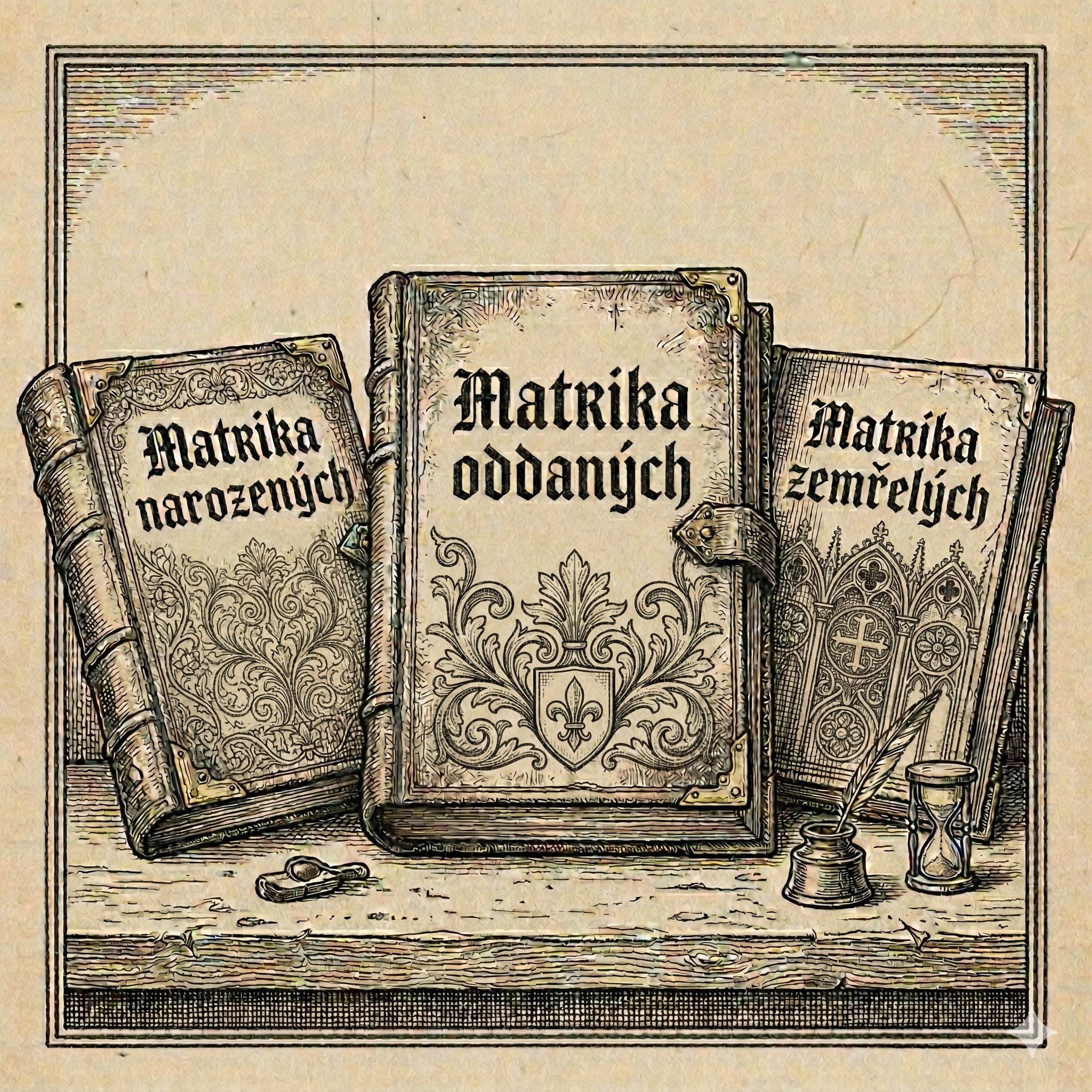
Initially, baptisms, marriages, and burials were recorded in the registers, all combined in a single book. Later, the records evolved into registers of births, marriages, and deaths, kept separately for individual municipalities for greater clarity. From the data in the registers, we can reconstruct the life of our ancestor, their family environment, social status, choice of partner and profession, the number and fate of their descendants, and often the cause of death.
Thanks to the register data, the church monitored the degree of consanguinity of potential spouses or the number of illegitimate children born out of wedlock. Conversely, for the nobility and authorities, the records had informative value from a demographic perspective, such as population development (number of births and deaths) or the socioeconomic level in the region.
Kateřina Schneiderová