1. Vital Records (Parish Registers)
The word matrika (registry/matrix) originates from the Latin expression mātrīcula, a diminutive of mātrīx, which means “stem” or “trunk” in Latin. In a figurative sense, the name is used for official lists and books containing records of people and their origins. The oldest registers began to appear in the Czech lands in the 16th century. After the Thirty Years’ War in the mid-17th century, regular records of baptisms, marriages, and burials became mandatory. At the end of the 19th century, civil registers were introduced for persons without religious affiliation, and by 1950, vital records were maintained exclusively by civil authorities, rather than the church.
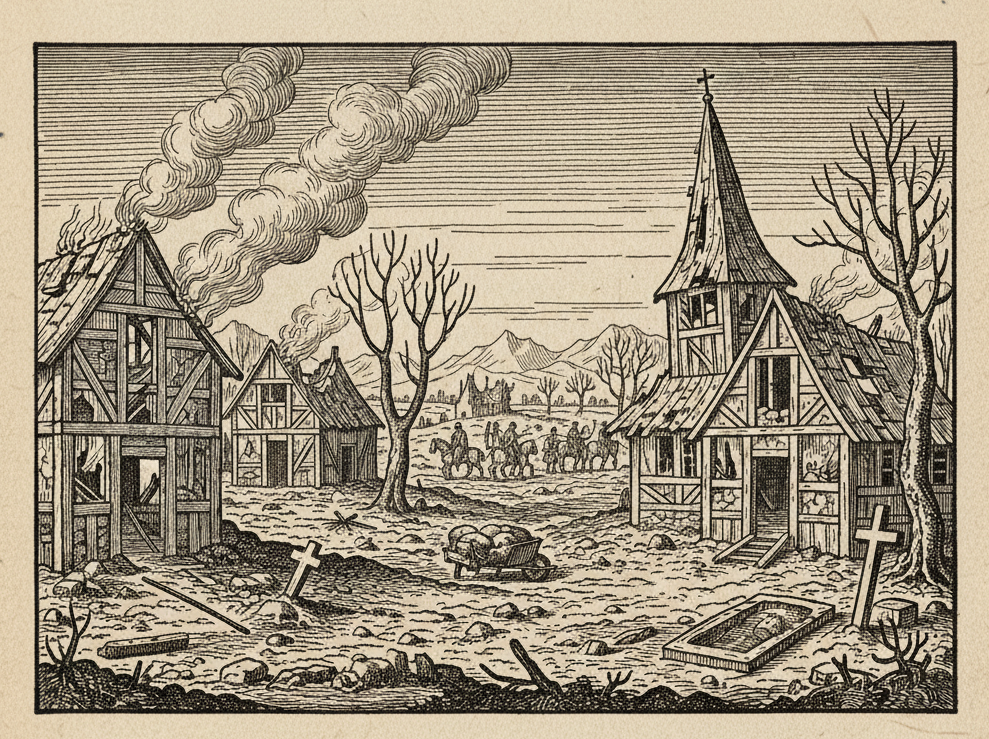
And the reason for the mandatory introduction of these registers? Undoubtedly power and finances (how surprising). The Thirty Years’ War represented a demographic and economic catastrophe for Bohemia and Moravia. The population fell by up to 50%, and over 100 towns and more than 1,000 villages were destroyed. The church needed the registers to keep track of its “flock” and record sacraments, while the nobility needed records of subjects for tax collection and military conscription.
Old registers are located in state regional archives (digitized on MATRIKY ONLINE). Registers from neighboring countries can be found on MATRICULA ONLINE. So-called “live” registers are subject to data protection; access to them is restricted by statutory periods (100 years for births, 75 for marriages, and 30 for deaths), and they are kept at registry offices according to their place of origin.
Kateřina Schneiderová