
21. The Trace of an Unknown Father in Archives
The search for the biological father of illegitimate children is considered a great challenge for genealogists. While an empty space is often left in the column for the father in the register entry or the laconic word “unknown” is added, the reality was usually found to be much more complex. Information, which could not or was not desired to be recorded in the parish register by the priest, is frequently hidden in other sources. Indeed, an extensive administrative trail was left behind by illegitimate origins. This was not caused by a desire for the social stigma to be lifted from the single mother and her child by society, but rather it was due to the fact that the financing of the child’s maintenance was intended to be avoided by the municipalities.
Where can evidence of paternity be searched for? The primary source is hidden in the birth register. An indisputable proof of paternity was constituted by the subsequent legitimization of the illegitimate child (more about legitimization can be read in the previous article). Furthermore, the godparents of the child are often served as another clue (more about godparents can be read in the previous article). High-ranking people were not acted as godparents to the poor just without reason (unless it was done for charitable purposes). Therefore, it can be assumed that they might have been relatives or friends of the actual concealed father, by whom unofficial patronage over the child was thus assumed. Moreover, a significant role in the search for the unknown father was also played by midwives. According to a decree, a duty was held by them to ascertain the name of the father from the mother directly during childbirth. When labor pains were experienced by the single mother, help was often refused by the midwife until the father’s name was revealed by the woman. It was believed that in the agony of the approaching birth, a lie could not be told by her. Consequently, this name was then reported by the midwife to the priest and the authorities. In the registers, the formulation “the mother gave the name of… as the father” signed precisely by the midwife and two witnesses can occasionally be found, or the specific man was summoned for interrogation by the nobility.
If silence is kept by the register, the search is shifted to other archival funds. Piles of papers, which are still laid in the archives today, were generated by the trail of money and the threat of poverty. An important source of information is represented by orphan files and court funds. An agenda of guardianship was kept by the authorities. Every illegitimate child had to be officially assigned a guardian, since full legal capacity was not possessed by a single mother. Alimony agreements (protocols regarding the interrogation of the mother as well as potential lawsuits for the establishment of paternity) have been preserved in the orphan files. Occasionally, records stating that a certain financial amount was deposited for the child by a “certain man” can be found in these funds.
The funds of home municipalities are presented as another source of facts. According to the laws of that time, the burden of poor relief for its members was borne by the municipality. If the mother and child were left destitute, they would have to be supported by the municipal treasury. Therefore, active pressure was exerted on the mother by the municipal council so that the father would be identified. Subsequently, pressure was then applied to the man so that his child would be financially taken care of. Records concerning disputes over the child’s right of domicile and complaints about the non-payment of alimony can be found in municipal protocols or the funds of poorhouses.
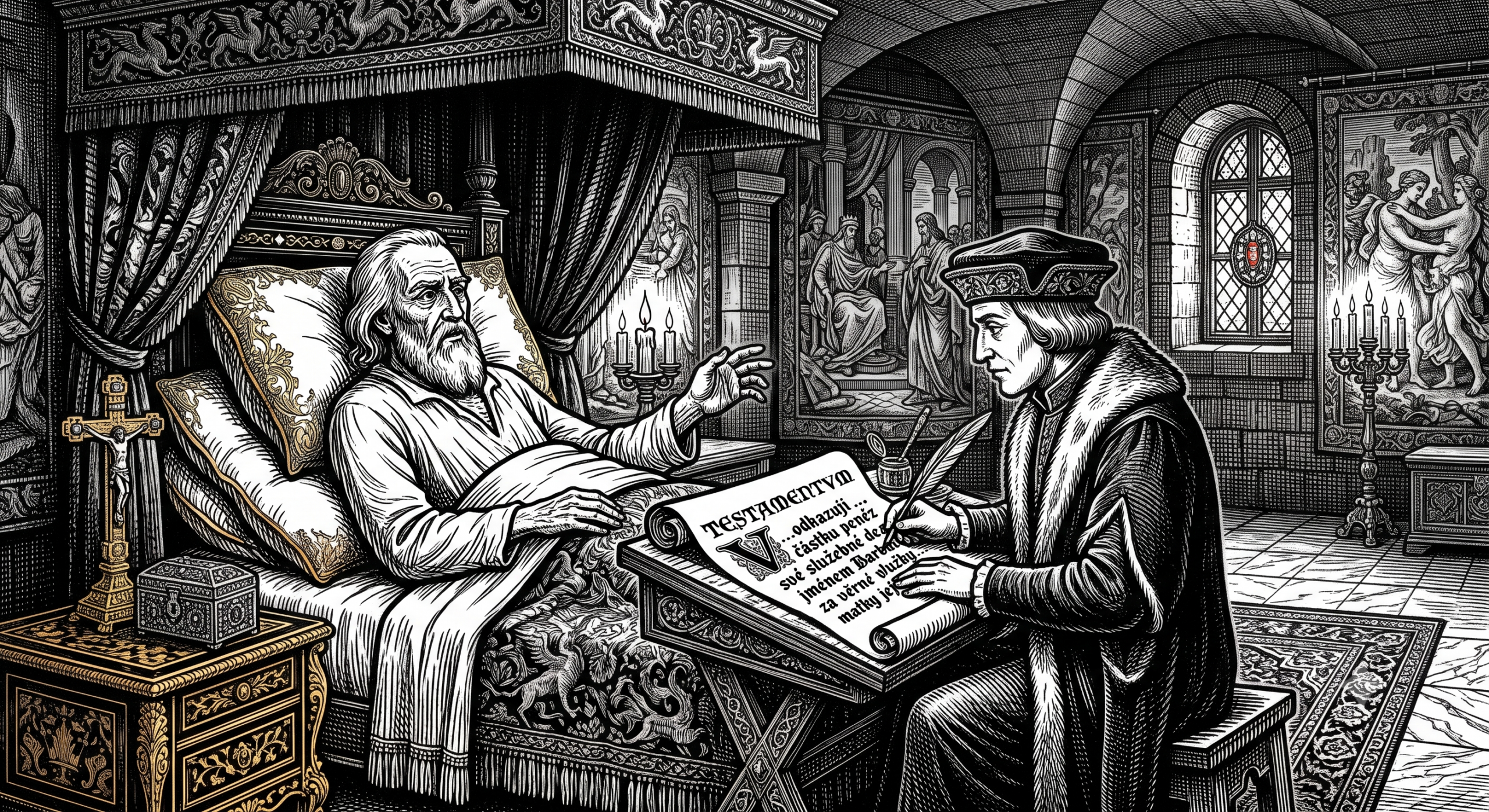
A considerable role in the search is also played by police and criminal files. In the event that the payment of alimony was refused by the father or he was reluctant to admit to the child, a denunciation was filed against him by the mother (often for seduction under the promise of marriage), and the case could be appeared in criminal files. Detailed interrogations of the mother, the witnesses, and the alleged father himself are contained in these alimony disputes. Additionally, clues for the clarification of the mystery of paternity can also be emerged in a will. If the father was represented by a nobleman, a priest, or a wealthy burgher, his conscience was often stirred at the end of his life, or posthumous scandals and lawsuits were desired to be prevented by him. Thus, a specific amount was frequently bequeathed in his will to a “certain boy in foster care” or to the “daughter of my former housekeeper”.
A story is possessed by every family. However, by far not all fates were found to be straightforward. Illegitimate children, secret marriages, the legitimization of descendants, or blind branches of a lineage – all of this is written on the yellowed pages of old registers. Nevertheless, the deciphering of period handwriting, Latin or German notes, and the understanding of the legal context of the time can be found difficult for a layman. By combining modern research methods, detailed work with historical registers, and archival documents, your roots can be mapped deep into the past. You will be helped by us to discover who your ancestors were, what they did for a living, and where you truly originate from. Let a free consultation be requested via the contact form, email, or WhatsApp.
Kateřina Schneiderová