
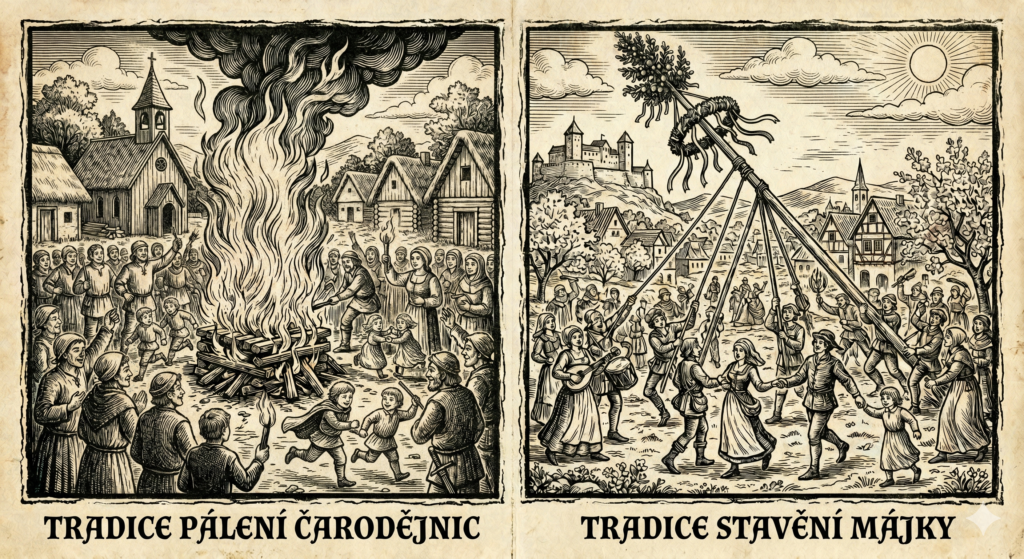
11. The Tradition of Burning Witches and Erecting the Maypole
Walpurgis Night (or the Eve of Saints Philip and James) is one of the most magical moments of the year. It intertwines ancient pagan rituals associated with protection from evil forces and the celebration of awakening nature. While today we gather around fires and erect maypoles with neighbors and friends, our ancestors experienced their own joys, fears, and romances by them.
The roots of the witch-burning custom reach back to the Celtic festival of Beltane. People believed that dark forces and evil beings had the greatest power on this night, and they used fire as a reliable protection against them while practicing magical rituals. With the advent of Christianity and later during the Inquisition, this evil was personified by the figure of the witch. On the eve of the holiday, ancestors lit bonfires, as the smoke and light could protect them from the lurking evil. They also threw old burning brooms into the air to symbolically strike down witches flying to their sabbath. They sprinkled buildings with holy water and scattered sand in front of the thresholds of houses and barns.
The Church, in accordance with Christian teachings, rejected the practice of pagan magic and witchcraft, and therefore overlaid this pagan custom with its own feast. The night of April 30th to May 1st is designated in the Christian calendar as the Eve of Saints Philip and James, named after the feast of the apostles St. Philip and St. James. As reliable protection against evil forces, priests recommended that believers spend the night in prayer and forbade them from participating in the boisterous fires. Today, the tradition of burning witches has become a community event. Adults roast sausages around communal bonfires, play guitar, and organize entertainment for children dressed as wizards and witches.
While the burning of witches was meant to ward off evil, the maypole signified a celebration of life and awakening nature. The tree trunk represented the connection between earth and sky, and the green top symbolized fertility and natural power. The tradition of erecting the maypole has not changed much over time and continues to this day with minor modifications. The task of unmarried men was to erect a tall conifer, the trunk of which had previously been stripped of bark and branches. They left a green top at its peak, under which they hung a wreath decorated with colorful ribbons. A crucial and popular part of the tradition was guarding the maypole at night. Young men from neighboring villages would try to secretly cut down the standing maypole under the cover of darkness, or at least steal its decorated top. If they succeeded, the outsmarted youths faced the ridicule of the local area for the rest of the year. May was historically a time of spring celebrations and youth gatherings. This relaxed social atmosphere contributed to more frequent conceptions (both legitimate and out of wedlock), which subsequently resulted in a February baby boom.
Do you know exactly where your family’s maypole stood? Were your ancestors respected farmers who proudly guarded the festive trees, or were their destinies perhaps intertwined with darker chapters of our history? The stories that shaped your family do not have to remain forever lost in time. Uncover your roots and connect your present with the lives of those who came before you.
Ask my web assistant how you can have an ancestry chart (family tree) created, which will become your family’s most treasured story.
Kateřina Schneiderová