
8. Origin and Meaning of Easter
In the Christian faith, Easter marks the celebration of the resurrection of Jesus, when Jesus, as the sacrificial lamb, redeemed humanity through his blood and suffering. The non-religious concept of the Easter holidays is currently highly commercialized, and its original meaning is thus often forgotten.
Easter did not emerge overnight based on a single event. Its origins can be found in the layering of three different cultures and traditions that eventually merged into one major holiday. Before the advent of Christianity, ancient peoples (Slavs, Celts, Germanic tribes) celebrated the arrival of spring and the vernal equinox. Through rituals, they worshiped nature deities, gave thanks for the end of winter, and magically summoned fertility to the fields and livestock. For a society existentially dependent on agriculture, winter was a struggle for survival (hunger, cold, and death), whereas spring brought sun, warmth, and a new harvest. The historical and chronological foundation for Christian Easter became the Jewish holiday of Pesach, commemorating the liberation of the Israelites from Egyptian slavery. According to Christians, Jesus Christ was crucified and rose from the dead precisely at the time when this Jewish holiday was being celebrated in Jerusalem.
The early church soon realized that eradicating the old pagan customs associated with the arrival of spring would be entirely impossible. Therefore, it gave the old traditions a new meaning. It transformed the original pagan celebration of awakening nature into the story of the resurrection of Christ. In the 20th century, the communist regime followed up on this proven strategy and overlaid this religious holiday with a socialist celebration of the holidays of spring.
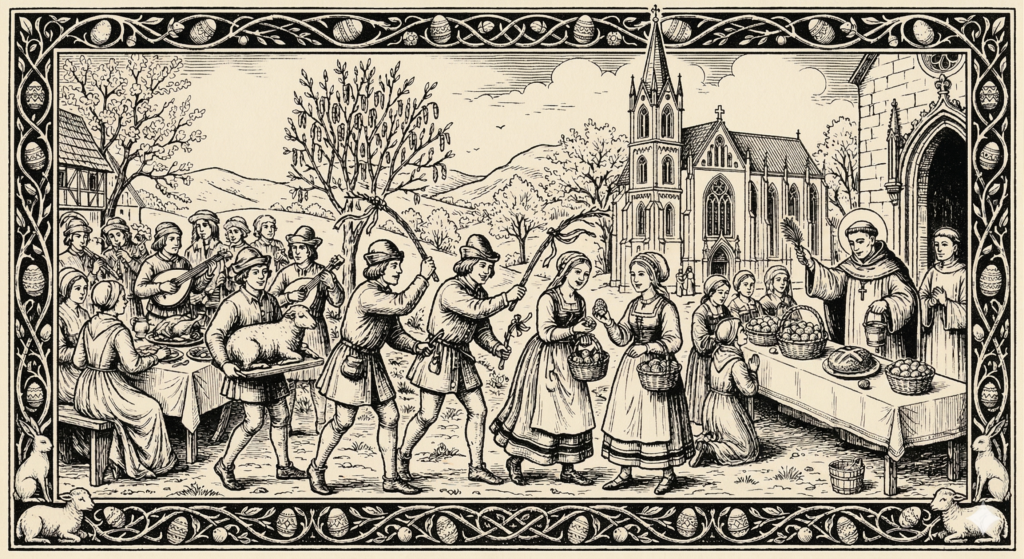
Every Easter symbol used conceals a specific meaning. The egg signifies new life, fertility, and resurrection. The “pomlázka” (a whip braided from willow twigs) passes youth, health, and strength to women. The lamb in the Christian tradition represents Jesus Christ, who was sacrificed for the salvation of the world. The symbolism of the hare comes from the celebrations of the pagan fertility goddess Eostre, who, according to legend, transformed a bird that froze in a blizzard into a hare. Out of gratitude, it then laid eggs every spring just like a bird.
Kateřina Schneiderová