
4. Structure and function of DNA
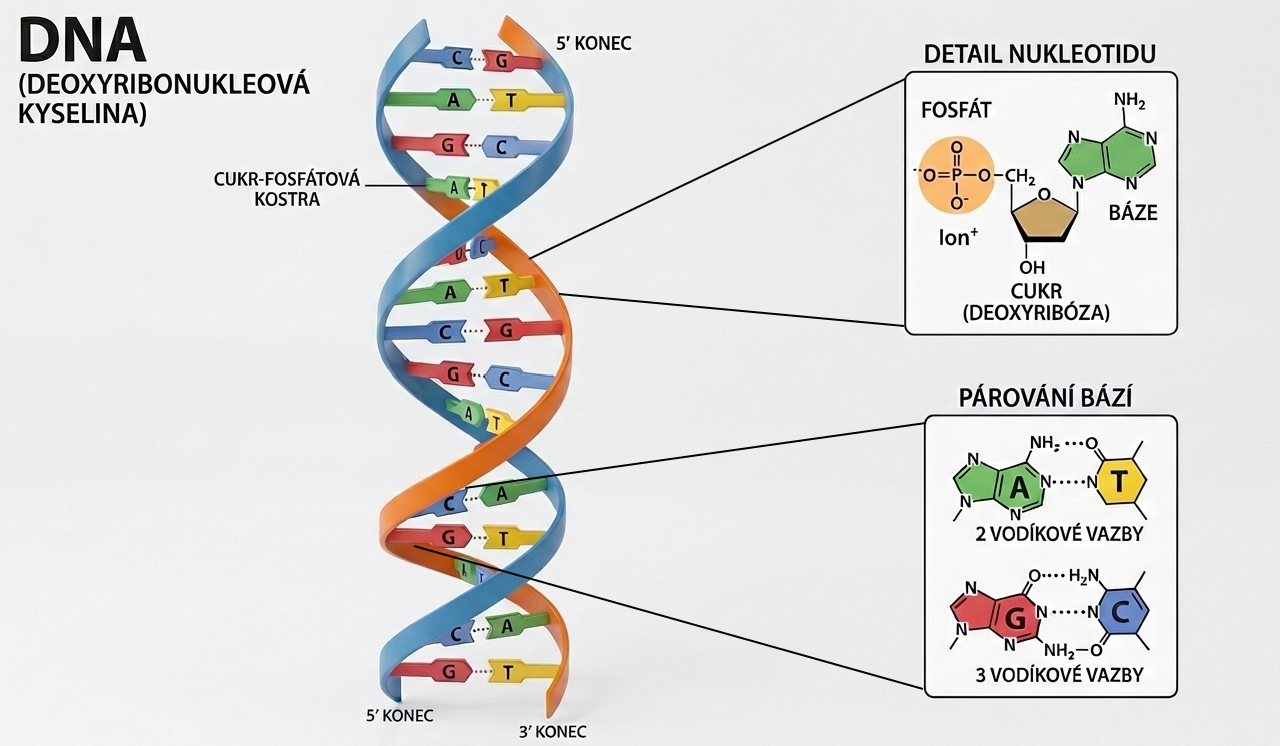
DNA (deoxyribonucleic acid) is found in the cell in the form of a right-handed double helix. It is made up of nucleotides, which contain the sugar deoxyribose and the nitrogenous bases adenine (A), cytosine (C), guanine (G), and thymine (T). Nucleotides always pair in the combinations A-T and G-C, and their specific sequence in the DNA strand allows for the determination of kinship between tested individuals during DNA testing.
DNA forms chromosomes, which are nuclear structures containing genes through which hereditary information is passed from parents to offspring. Every human cell contains 23 pairs of chromosomes, which are divided into 22 pairs of non-sex chromosomes (autosomes) and 1 pair of sex chromosomes (in the combination XX or XY). Outside the nucleus, DNA is also found in the cell’s mitochondria.
Genealogical testing utilizes tests of autosomal DNA (atDNA), mitochondrial DNA (mtDNA), and the Y-chromosome (Y-DNA).
Kateřina Schneiderová