
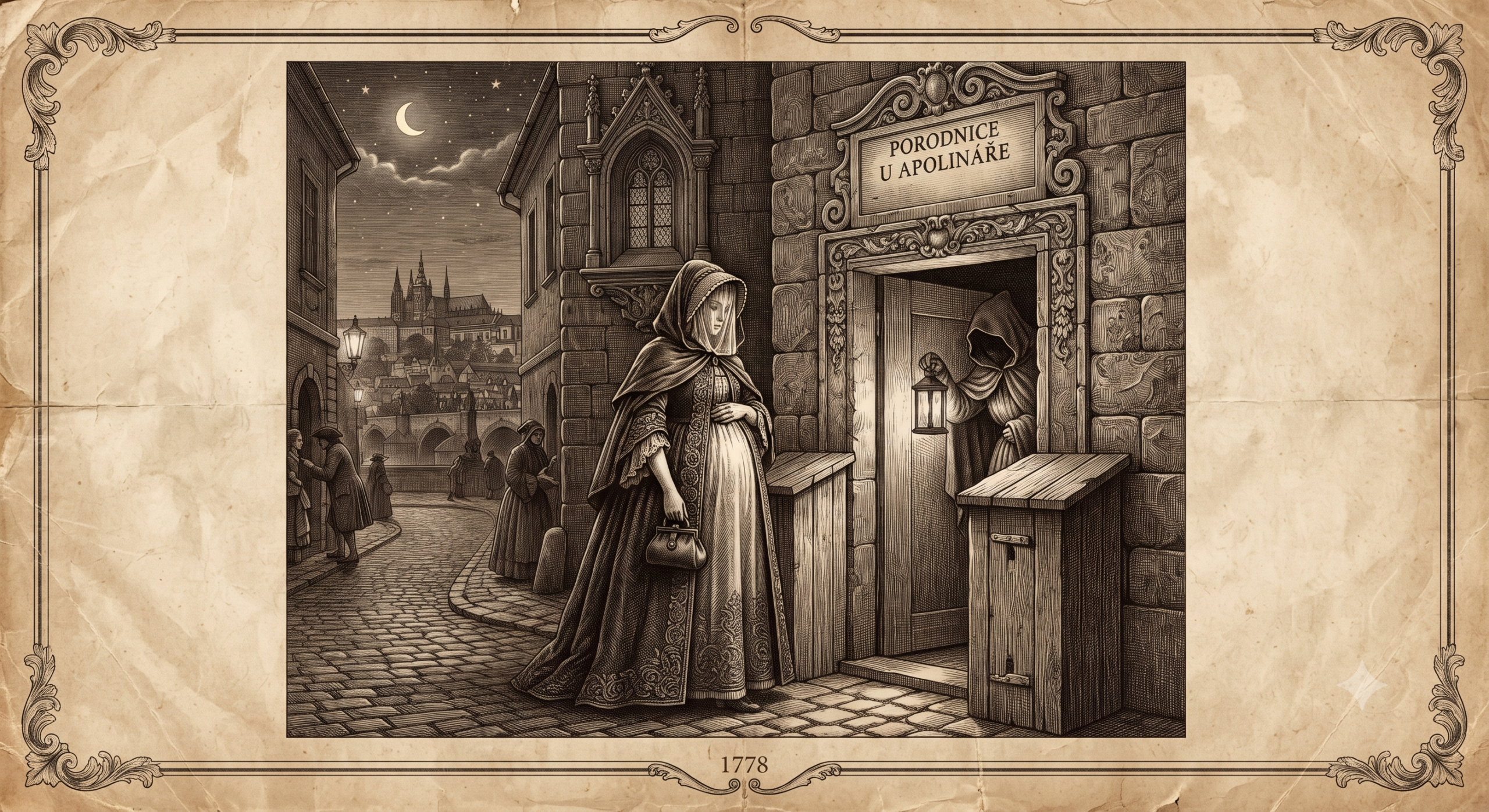
24. Concealed Births and Infanticide
The history of concealed births and the crime of infanticide (the murder of a newborn child by its mother) is considered a drama marked by poverty, social condemnation, and the gradual penetration of state power into human privacy. In the 18th and 19th centuries, immense pressure was faced by single mothers. Especially in the urban environment, where many maids, female workers, and poorer women were lived, a social downfall was meant by the birth of an illegitimate child (more can be read in the previous article). Consequently, without financial means, without the support of family, and with the dismissive attitude of the society of that time, an inescapable situation was found themselves in by women. So that attempts at abortions or the murders of newborns out of necessity could be prevented by the state, public maternity hospitals connected with foundling hospitals were begun to be established. Furthermore, anonymous childbirth was allowed for women by these institutions, and at least basic care for the child was successfully secured, even though a high mortality rate of both newborns and their mothers was faced by them.
What is infanticide and how was it punished in the past? Many young girls, typically maids or farmhands, were driven to extreme acts by the fear of lifelong disgrace and absolute poverty. The pregnancy was attempted to be concealed by them for as long as possible, in the desperate hope that the situation would somehow be resolved or that they would eventually be taken care of by the child’s father. When dangerous and illegal abortion attempts were failed, the most tragic outcome was occurred – infanticide. Out of a short circuit and terror of the future, her secretly born child was killed by the mother. During the Middle Ages and the early modern period, infanticide was ranked among the most serious crimes, and death (by burning, drowning, or being buried alive) was usually constituted as the punishment for it. In the Age of Enlightenment, the punishments for infanticide were mitigated by monarchs such as Maria Theresa or Joseph II, because it was realized by them that a woman pushed to such an act is often acted in a state of delirium, under the influence of panic and total social destitution.
Why was the system of concealed births and foundling hospitals created? A progressive solution in the 18th century was represented by the introduction of the possibility of a concealed birth and the utilization of the services of foundling hospitals. Foundling and maternity hospitals for single mothers were begun to be built, where it was allowed for them to give birth in anonymity and to hand the child over to state or church care. In our environment, a key role was played by the Provincial Maternity Hospital at St. Apollinaris in Prague. Its building was designed in such a way that the privacy and honor of women from various social classes would be protected. A secret entrance was utilized by veiled women (often even from higher circles) by whom a scandal could not be afforded. In a ward inaccessible to the public, the mothers were delivered incognito for a corresponding fee. Women with a certificate of destitution from the priest of their home municipality were treated for free. After the birth, the child could be left there in the care of the foundling hospital, by which the placement of infants into substitute foster care in the countryside (for a financial contribution from the state) was subsequently secured. A similar, yet more massive model was operated in Vienna, Austria, at the General Hospital (Allgemeines Krankenhaus). Just like St. Apollinaris, Vienna was attracted to by women from all over Central Europe by whom giving birth in complete anonymity, far from their homes and neighborhood gossip, was needed. The concealment of identity was strictly guarded there, by which mothers were allowed to be returned to their normal lives without a lifelong stigma of shame.
Are forgotten fates, unknown ancestors, or traces of dramatic events from the past hidden by your family story? The search for ancestors is not merely considered a sum of dates and names; rather, it is recognized as the discovery of real human fates, which were often marked by poverty, social pressure, and the cruel rules of that time. Let our professional genealogical services be utilized, and let the tracks of your own history be followed with us. Let a free consultation be requested via the contact form, email, or WhatsApp .
Kateřina Schneiderová